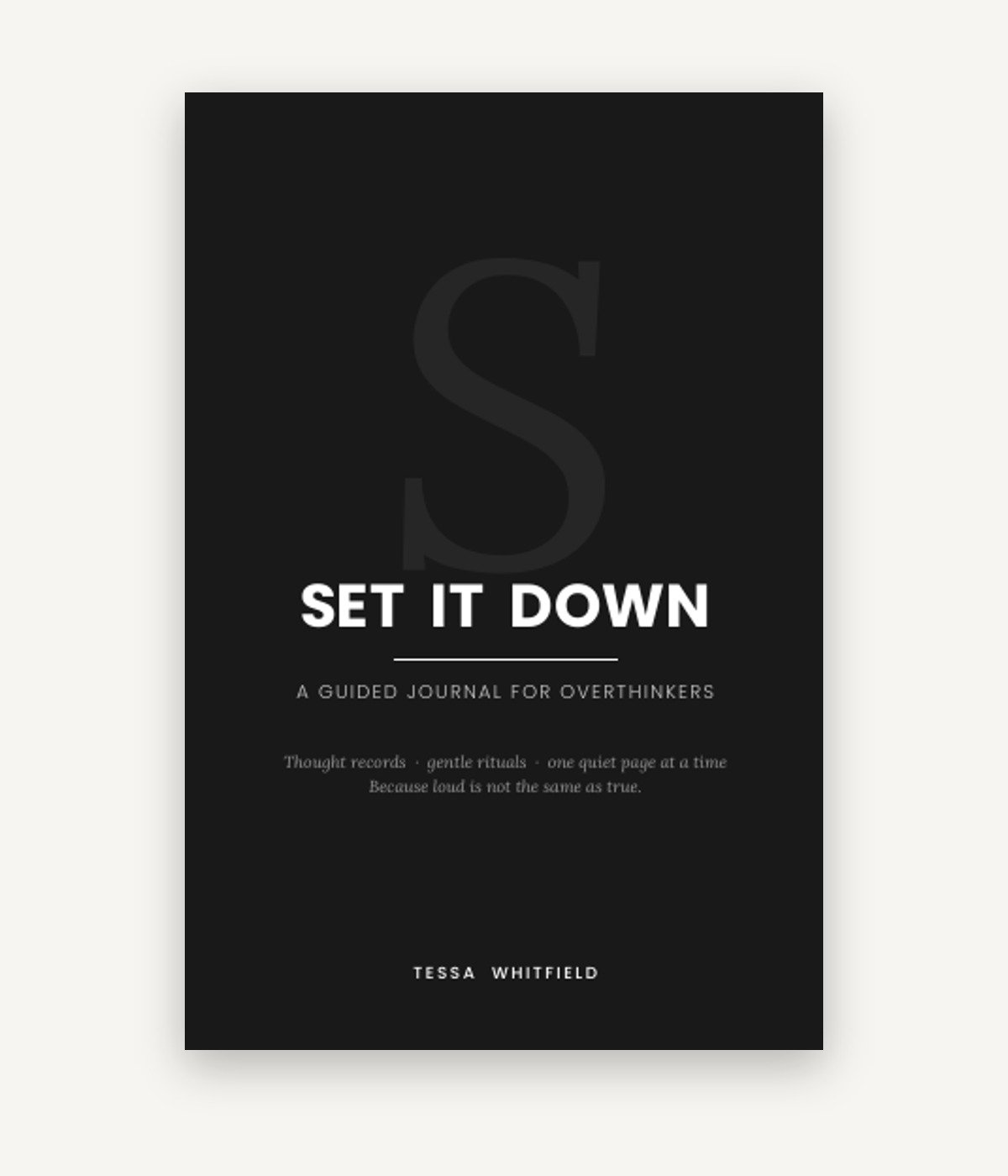
Book two — by Tessa Whitfield
Set It Down
A guided journal for overthinkers. Replayed conversations, rehearsed disasters, questions you've already answered — this is a place to put them down, one quiet page at a time.
$12.99 · printed, shipped and returnable through Amazon.
Look inside
How it is built
Four gentle phases, and a handful of recurring tools. These are photographs of the actual pages.
Question
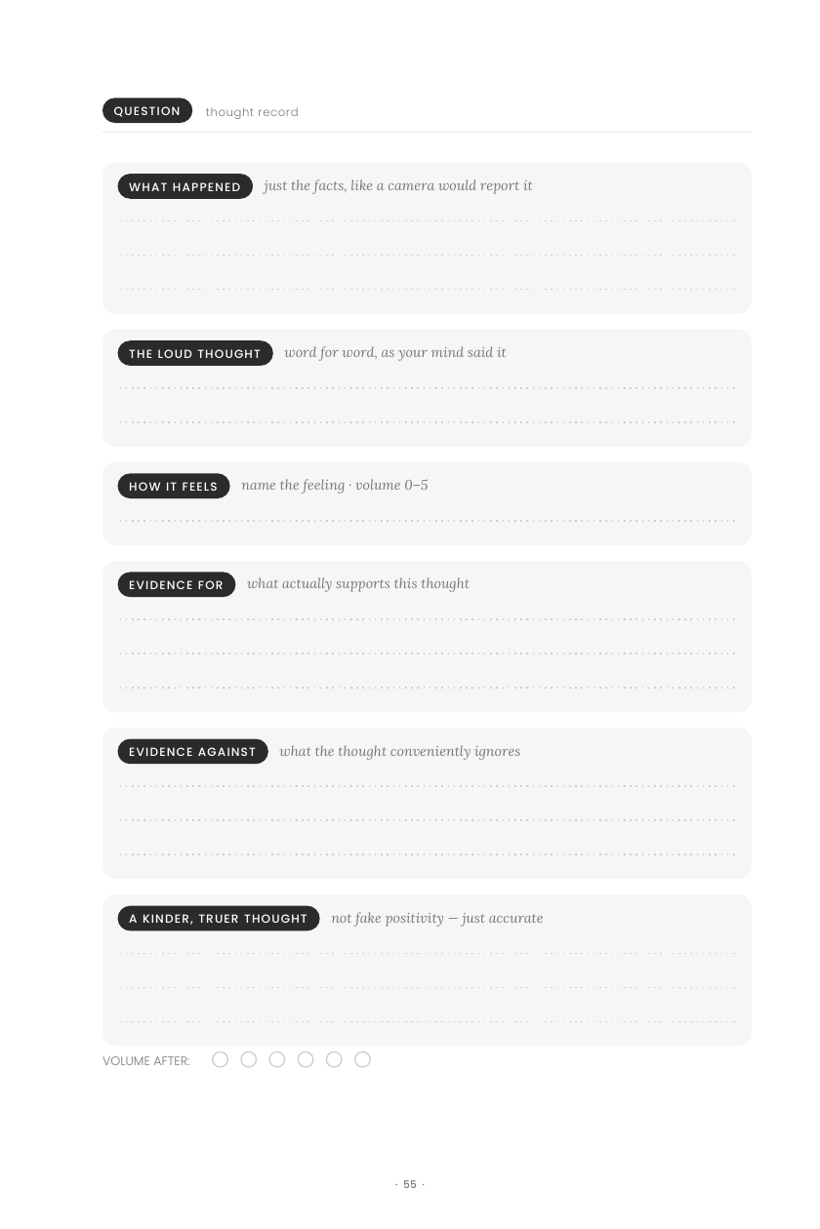
Real thought records
The CBT tool therapists actually use, made kind — the loud thought, the evidence both ways, and a kinder, truer one. Not fake positivity; just accurate.
Notice
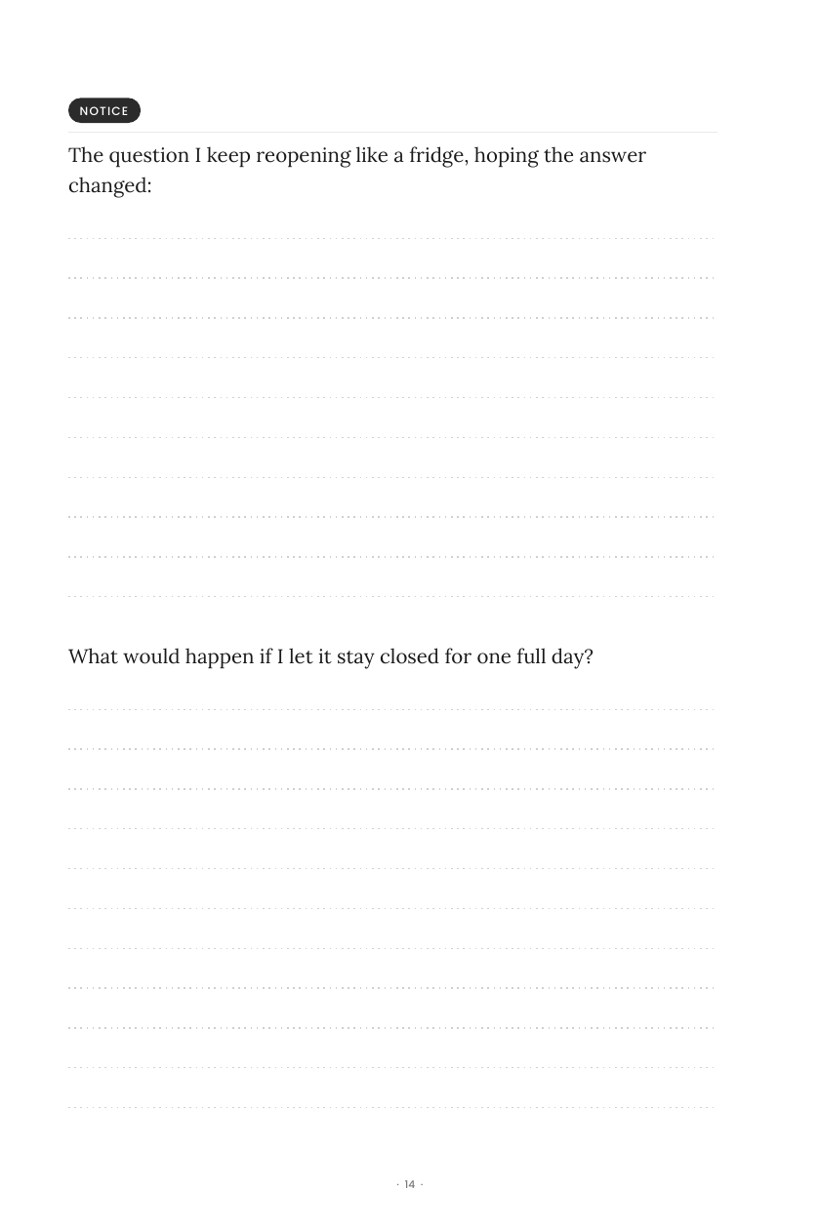
Prompts that see the loops
"The question I keep reopening like a fridge, hoping the answer changed" — pages that name the patterns so they stop running unattended.
Throughout
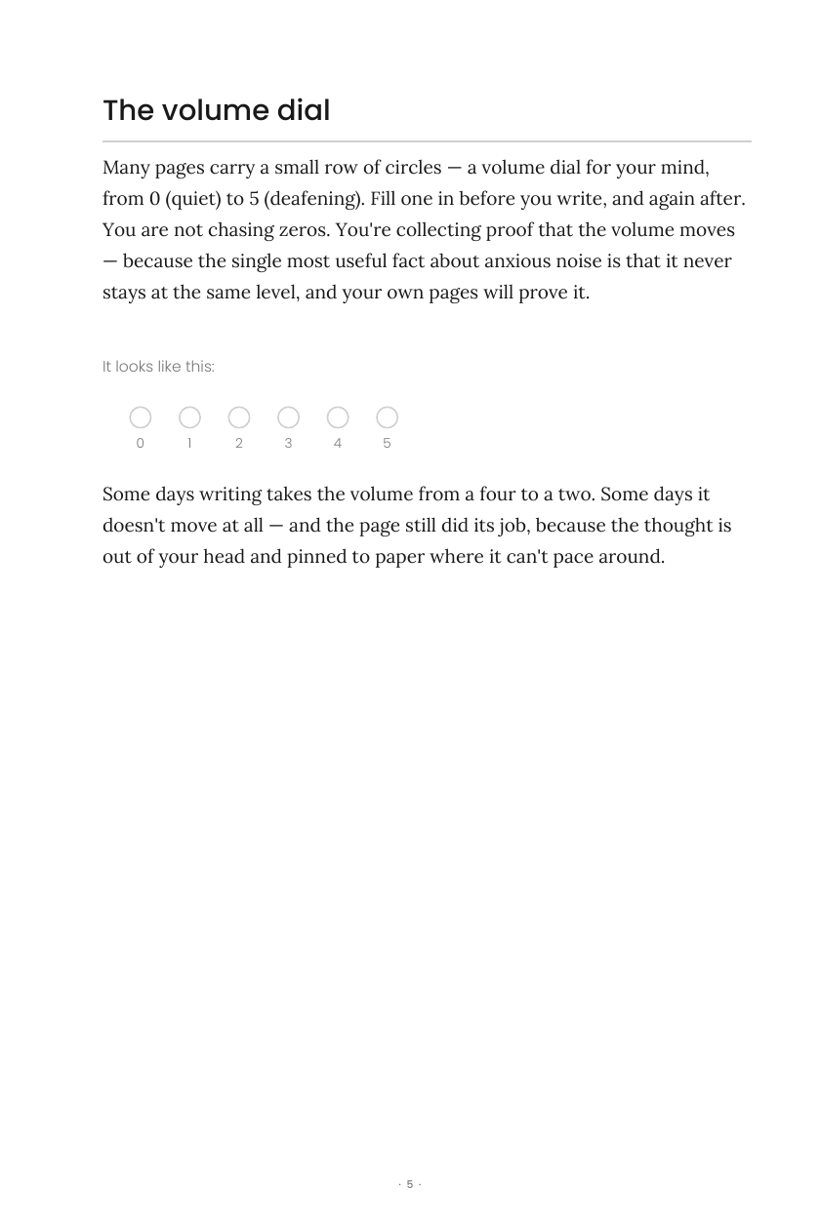
The volume dial
Rate the noise 0–5 before you write and after. You're not chasing zeros — you're collecting proof, in your own ink, that the volume moves.
Also inside
The furniture of the book
The Landing — a three-minute ritual that opens every writing session. The thought-trap field guide — eight familiar patterns with friendly names: the Fortune Teller, the Mind Reader, the Should Machine. The 3 A.M. Page — a fold-the-corner protocol for the nights your mind won't put the day down. And the occasional page that asks nothing at all.
Discreet by design: after the opening pages, no clinical label appears anywhere. It reads like a notebook, not a diagnosis.
Plainly: this is a guided journal — a companion informed by well-established CBT tools, not therapy, not treatment, and not a substitute for care from a qualified professional. As companions go, though, it has excellent listening skills.
The other book
Set It Down is for the evenings your head is loud. The Focus Anchor is for the mornings your day needs a shape — an undated 90-day daily planner built on the same principle: one calm page, nothing shouting. They share a desk well.
Hear when something new is finished
One email when a new book, pattern or print set lands. That's the whole thing.
Unsubscribe in one click.